Generic selectors
Exact matches only
Search in title
Search in content
Post Type Selectors
Filter by Categories
Events


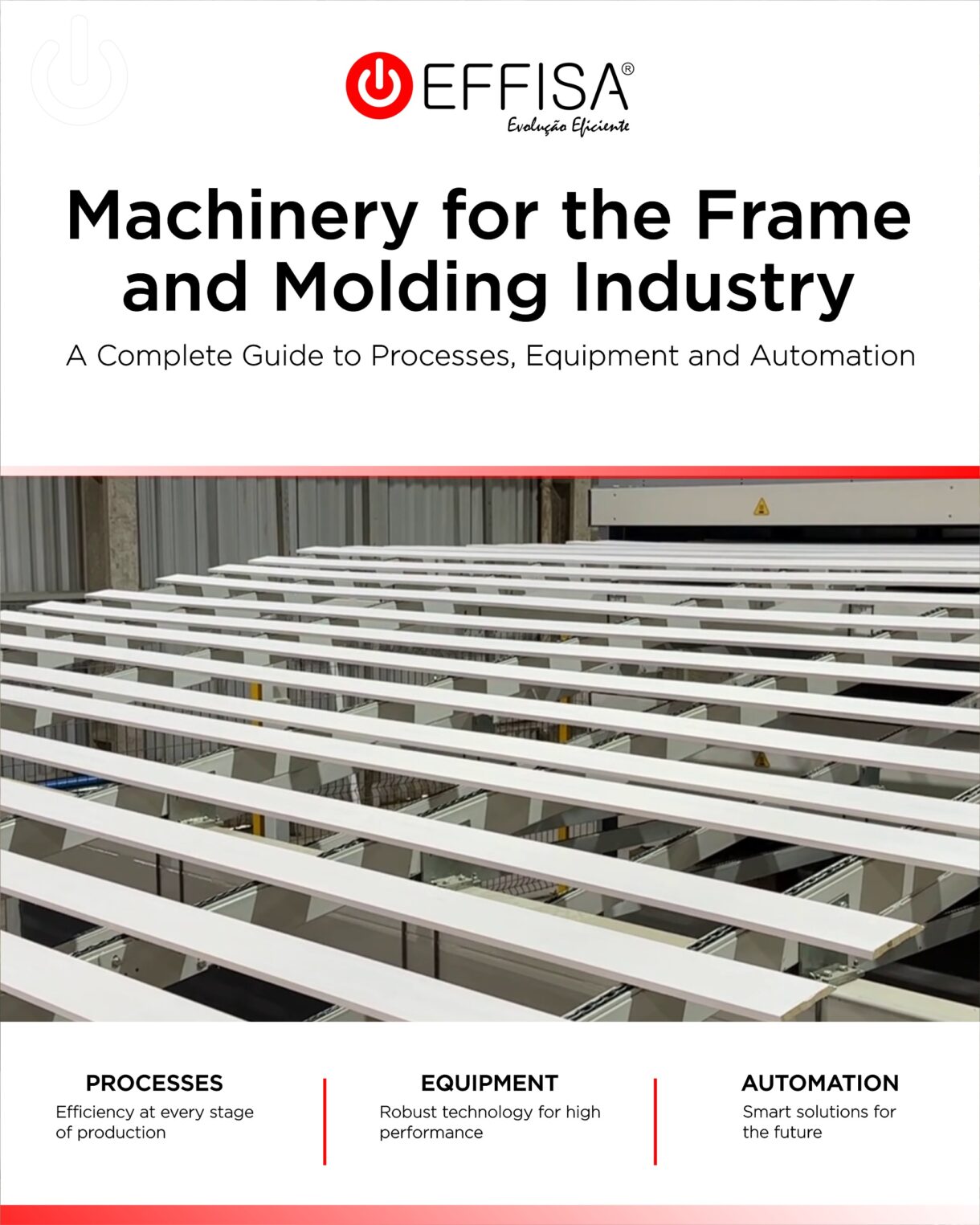
Machinery for the Frame and Molding Industry: A Complete Guide to Processes, Equipment and Automation

The frame and molding industry — covering finished picture frames as well as moldings used for trim, baseboards, doors, gesso/plaster ornamentation and decorative applications in general — has undergone a deep transformation over the last two decades. What used to be a largely manual process now depends on production lines with multiple automated stages, each requiring a specific type of industrial machine.

If you are setting up, expanding or modernizing a molding factory, understanding which machines make up this production chain is the first step toward safer investment decisions. In this guide, we explain each stage of the process, the equipment involved, and how automation has been changing productivity in the sector.

What is the frame and molding industry

The market is broader than it seems, and it’s worth separating two related concepts:

  • Moldings (also spelled mouldings) are the profiled strips — in wood, polystyrene (PS), coated MDF or other composites — used as raw material for picture frames, wall trim, baseboards, door and window casings, and gesso/plaster-finished ornamental profiles.
  • Frames are the finished product made from cut and assembled molding profiles, most commonly used for pictures, mirrors and artwork.

A single manufacturer’s machinery can serve both ends of this chain — from producing the raw molding profile to the finishing processes (painting, gesso application, coating) that turn it into a market-ready product.

What machines does a molding factory need

A molding production line is rarely made up of a single machine. In practice, it is a sequence of interconnected processes. The main stages are:

1. Extrusion and engraving

This is the stage where the molding profile is formed — the raw material is shaped into the final format that later receives the finish. In many factories, this stage already includes engraving systems for textures and decorative details directly on the profile.

2. Lamination and coating

After extrusion, the profile often receives a coating layer — paper, film or foil — that defines the final finish. Equipment such as horizontal flat laminators, profile coating machines and vertical gluing machines operate at this stage, along with processes such as hot stamping for metallic or textured effects.

3. Gesso and plaster application

Many decorative moldings — particularly those imitating classic ornamental profiles — receive a gesso (plaster-based) coating that allows for detailed relief work and a premium painted finish. This step is typically paired with a dedicated drying stage before painting.

4. Painting

Painting is one of the most critical stages — and one of the most technologically advanced. Today there are vacuum-immersion painting lines with convection drying and adjustable line speed (it is common to find lines operating between 30 and 110 m/min, depending on the product and the paint). There are also UV painting lines, with a feed → application → vacuum painting → UV curing → inspection process, which allow fast coating cure and a direct productivity gain — especially relevant for cables and rounded profiles.

5. Sanding and polishing

Before or after painting, the profile generally goes through edge, end or flat-surface sanding, ensuring the final finish and the adhesion of the paint, gesso or coating.

6. Drying

A stage that accompanies practically all gesso, coating and painting processes, and is decisive for line speed and final product quality.

7. Handling and automation

As the factory grows, handling between stages stops being manual and starts depending on automated systems — conveyors, automatic stackers and integration between machines. This is where the concept of a complete line comes in: instead of isolated machines, a continuous flow between extrusion, coating, gesso application, painting, drying, sanding and packaging.

8. Cutting

A precision stage, performed by profile milling machines, multiple coil slitters or universal slitting/shaping machines, depending on the final shape of the molding or frame.

9. Packaging

The last stage before shipping. Automated packaging lines — with labelers, stretch-film applicators and cutting/end-capping systems — reduce manual errors and increase standardization of the final product.

Automation: the main competitive advantage today

Molding factories that still operate with manual or semi-automatic processes face three recurring problems: quality variation between batches, production bottlenecks and high labor cost per unit produced.

Automation solves this directly:

  • Standardization: every piece goes through the same process, with the same parameters;
  • Reduced bottlenecks: stages such as painting and drying, which used to limit line speed, become continuous and synchronized;
  • Traceability: systems with production control, reports and remote access allow real-time monitoring of the line;
  • Productivity per linear meter: integrated lines produce more in the same physical space.

How to choose machinery for a frame and molding factory

Before investing, it’s worth mapping out:

  1. Desired production volume — determines the required speed at each stage (m/min).
  2. Type of material worked — wood, PS, MDF or other composites require different extrusion, gesso and painting parameters.
  3. Current automation level of the factory — buying a standalone machine is different from planning a fully integrated line.
  4. Need for customization — custom projects tend to pay off faster in high-volume operations or specific products.
  5. Technical support and assistance — for industrial equipment, the manufacturer’s proximity and its ability to provide local installation and training matter as much as the machine itself.

EFFISA and the frame and molding industry

EFFISA is a Brazilian manufacturer of industrial machinery and equipment, based in Braço do Norte (SC), with more than 12 years dedicated to surface treatment and the handling of profiles and panels. Over this period, the company has delivered more than 2,000 industrial machines to the furniture and molding industries — an average of over 150 machines per year — and holds ISO 9001 certification across its processes, from design to manufacturing.

The company operates specifically in the molding and board segment, with solutions covering practically every stage described in this guide:

  • Profile extrusion and engraving;
  • Lamination and coating (including hot stamping);
  • Gesso/plaster application lines;
  • Painting lines — conventional, vacuum and UV;
  • Sanding and polishing of edges, ends and surfaces;
  • Drying;
  • Line handling and automation;
  • Cutting;
  • Automated packaging, including premium lines with labeling, automatic stretch-wrapping and end-cap insertion.

With commercial presence in more than 27 countries and a partnership with Makor Group — a traditional Italian group in the sector —, EFFISA develops both standalone machines and complete-line projects, with in-house engineering, installation and technical support.

Frequently asked questions

What are the main stages of a molding production line? Extrusion, lamination/coating, gesso application, painting, drying, sanding, cutting, handling and packaging — each with specific equipment that can operate standalone or as an integrated line.

Is it worth automating a small molding factory? It depends on volume and current labor cost, but even partial automation (such as a painting or packaging line) already reduces bottlenecks and quality variation.

What is the difference between conventional and UV painting on profiles? UV painting allows fast coating cure right after application, increasing line speed compared to conventional convection-drying processes.

What is gesso used for in molding manufacturing? Gesso (a plaster-based coating) is applied to certain decorative moldings to allow detailed relief work and to prepare the surface for a premium painted finish, particularly in classic ornamental profiles.

Is it possible to have a complete line from a single manufacturer? Yes. Manufacturers with a broad portfolio — such as extrusion, coating, gesso application, painting, drying, sanding, handling and packaging under the same supplier — allow the whole line to be integrated with unified engineering and support.

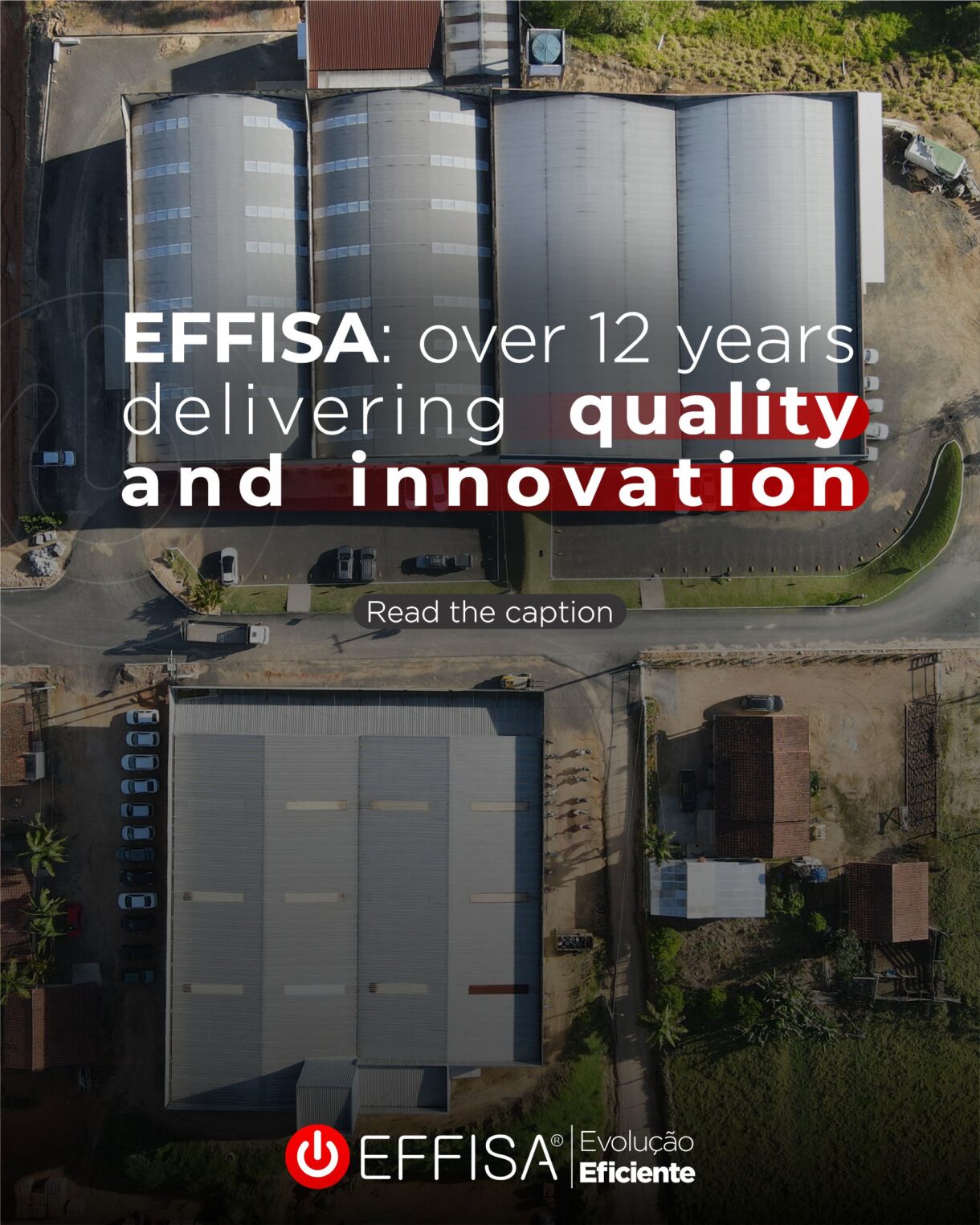
EFFISA: over 12 years delivering quality and innovation

EFFISA: over 12 years delivering quality and innovation

In 13 years on the market, EFFISA has delivered more than 2,000 industrial machines to the furniture and moulding industry — an average of over 150 machines per year, an impressive volume for the company’s time in operation. This pace, backed by complete production lines and ISO 9001 certification, places EFFISA among the manufacturers that have advanced the most in the sector over the past decade. Today, the company also counts the Makor Group, a traditional Italian group in the industry, as a partner.

What drives this pace

This growth is no accident. Three factors explain the company’s progress over the period:

Complete production lines. EFFISA manufactures 8 different lines for surface treatment of profiles, doors and panels, serving the furniture, moulding, frame, and coating industries: laminating/coating, cutting, sanding/polishing, packaging, painting, drying, handling, and extrusion/engraving. This allows customers to be served from start to finish of the production process, with a single supplier.

Certified quality standard. ISO 9001 certification ensures that every machine delivered follows standardized processes, from design to manufacturing — a requirement increasingly demanded by industrial customers seeking predictability and long-term technical support.

Internationally recognized partnerships. EFFISA maintains strategic partnerships with leading groups in the international market, which expands its commercial and technological capacity and reinforces its position as a manufacturer with global reach.

This growth was publicly recognized in July 2023, when EFFISA appeared on the cover of Revista Industrial — one of the most traditional publications in Brazil’s wood industry — in a feature celebrating the brand’s 10th anniversary.

Discover some of our production lines

The Importance of After-Sales Service in the Industrial Sector

In the industrial sector, after-sales service is essential to ensure proper equipment performance and uninterrupted production. It goes beyond machine delivery, including training, technical support, and continuous follow-up.

Efficient after-sales service reduces unexpected downtime, extends equipment lifespan, and prevents operational losses. It also strengthens the relationship with customers, building trust and long-term partnerships.

More than an additional service, after-sales support is a competitive advantage that shows commitment to customer success.

At EFFISA, our job doesn’t end with the sale — we stay close to our customers to ensure performance, safety, and productivity.

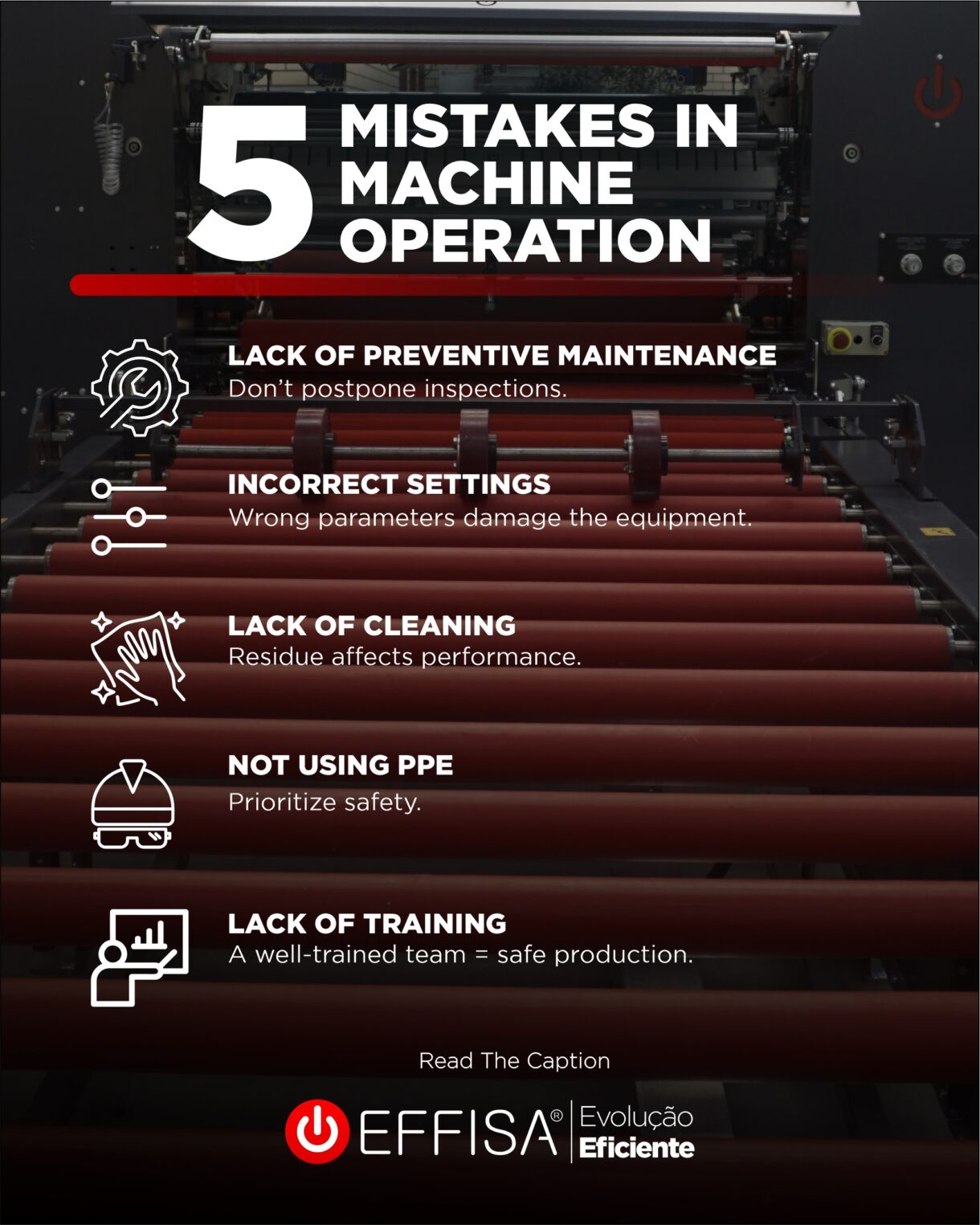
5 Common Machine Operation Mistakes and How to Avoid Them

Operating machines requires attention, knowledge, and well-defined procedures.

Some simple mistakes can reduce productivity and even cause accidents.

Here are the most common ones and how to avoid them:
1. Lack of preventive maintenance
Ignoring inspections increases the risk of failures, reduces equipment lifespan, and generates losses.
How to avoid it: Keep a maintenance schedule and record all inspections.
EFFISA equipment features an intelligent management system capable of controlling and automatically scheduling maintenance through the SUPERVISORY system, ensuring greater safety and accuracy.

2. Incorrect machine settings
Improperly configured parameters affect finishing quality, reduce efficiency, and may damage the equipment.
How to avoid it: Provide manuals, standard operating procedures, and offer ongoing training.
EFFISA has the largest and most experienced technical team in the segment, ready to support your operators and ensure the equipment is used correctly.

3. Lack of cleaning
The buildup of dust and residues reduces machine performance and increases the risk of mechanical issues and accidents.
How to avoid it: Implement daily cleaning and organization routines.
Our manuals include simple and practical guidelines that can be applied in the day-to-day production process.

4. Not using PPE
The lack of personal protective equipment is one of the main causes of accidents in machine operation.
How to avoid it: Provide high-quality PPE, train the team to use it correctly, and enforce daily use.

5. Lack of training
Operators without continuous updates tend to make mistakes that could easily be avoided.
How to avoid it: Invest in recurring training and keep records of all refresher sessions.
EFFISA offers complete training programs, delivered by specialized technicians, with certificates issued at the end of the course.

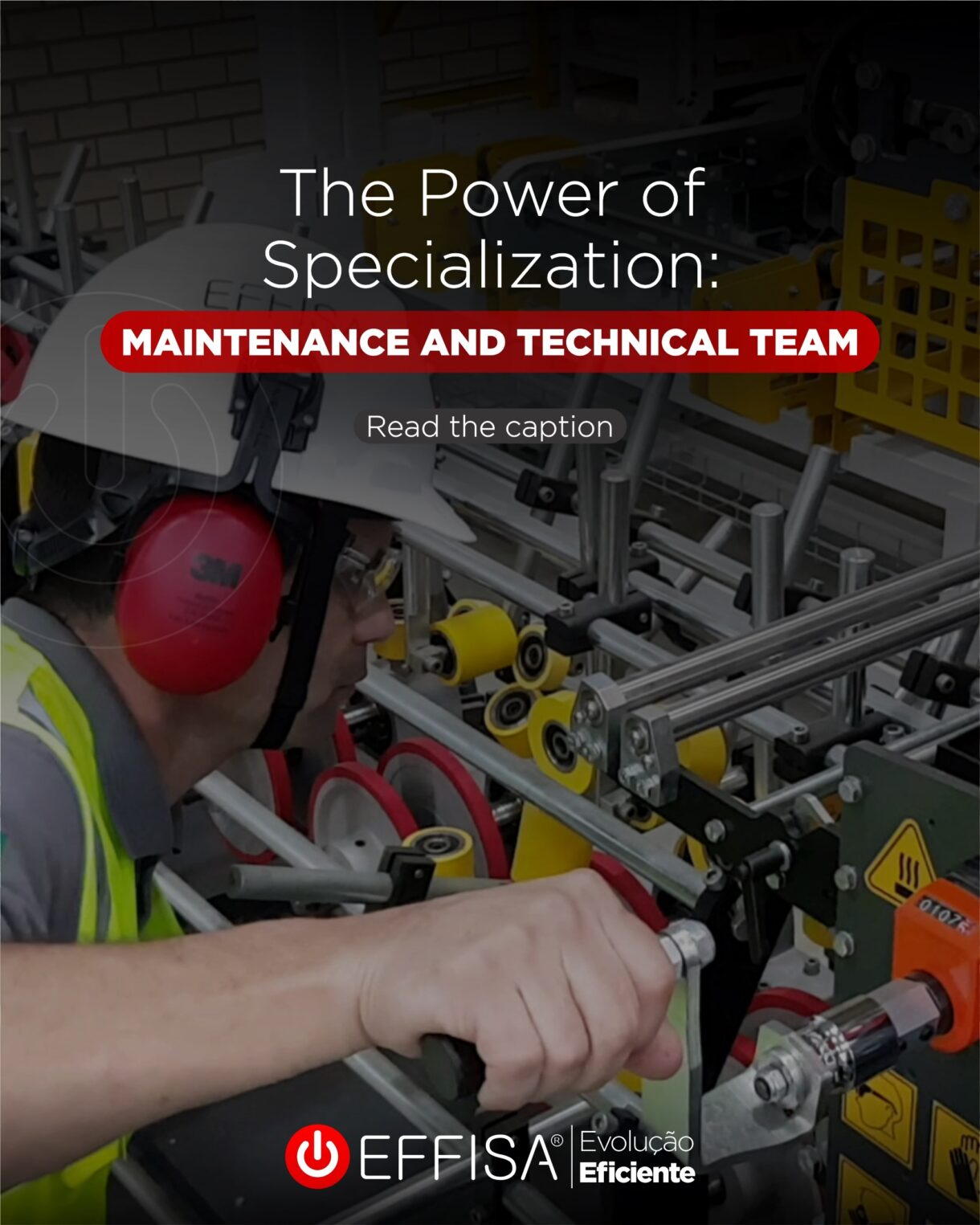
The importance of maintenance and specialized technical teams in the industrial sector

Maintenance is one of the key pillars for ensuring productivity and efficiency.
When performed by skilled professionals, it prevents unplanned downtime, reduces costs, and extends the lifespan of equipment.

Specialized maintenance detects failures in advance, uses the correct components, and follows strict technical standards — what differentiates a common intervention from a truly efficient one.

At EFFISA, every stage is carried out by a specialized technical team with hands-on knowledge and a commitment to results.
These professionals undergo continuous training, master technical standards, and ensure that every project is delivered with excellence.

In addition, EFFISA develops customized solutions for the industrial sector, tailored to each client’s production, space, and technology needs.

Choosing a specialized company means investing in quality, safety, and peace of mind.
EFFISA understands the challenges of the industrial sector and works with dedication to drive the growth of its partner companies.

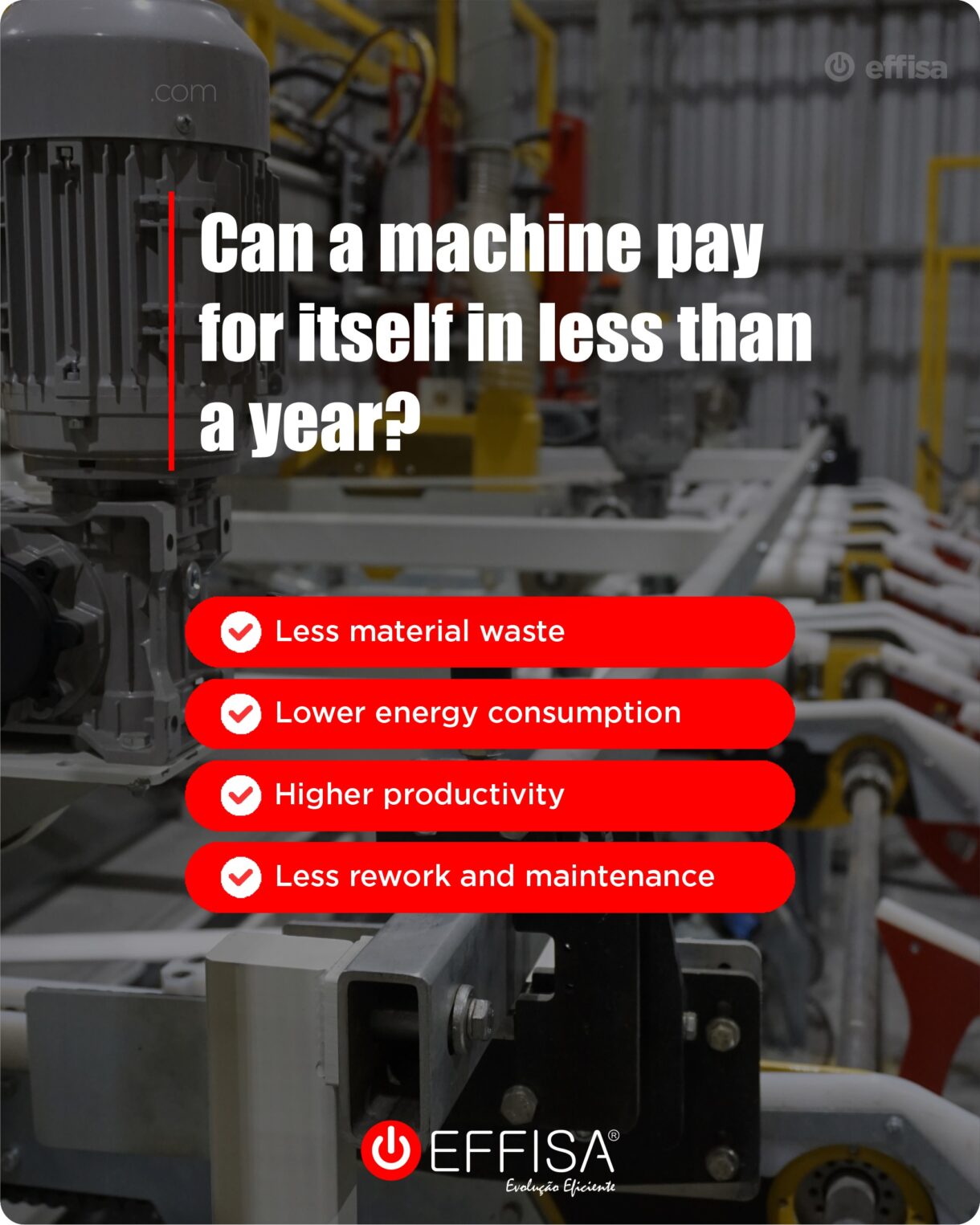
Did you know a machine can pay for itself in less than a year?

Investing in technology often raises a question: is it really worth it?
The answer lies in the efficiency of modern machines, which can generate so much savings and productivity that the investment pays for itself in just a few months.

How does it happen?

  • Less material waste → precise cuts and finishes make better use of each piece.

  • Lower energy consumption → updated equipment uses less power.

  • Higher productivity → serial production means delivering more in less time.

  • Less rework and maintenance → quality and reliability from the first execution.

Together, these factors create such significant savings that, in many cases, the cost of the machine is recovered in less than a year.

Conclusion

Investing in efficiency is not an expense, it’s a return.
At Effisa, we design machines that combine robustness and technology so that every production run is faster, more economical, and more competitive.

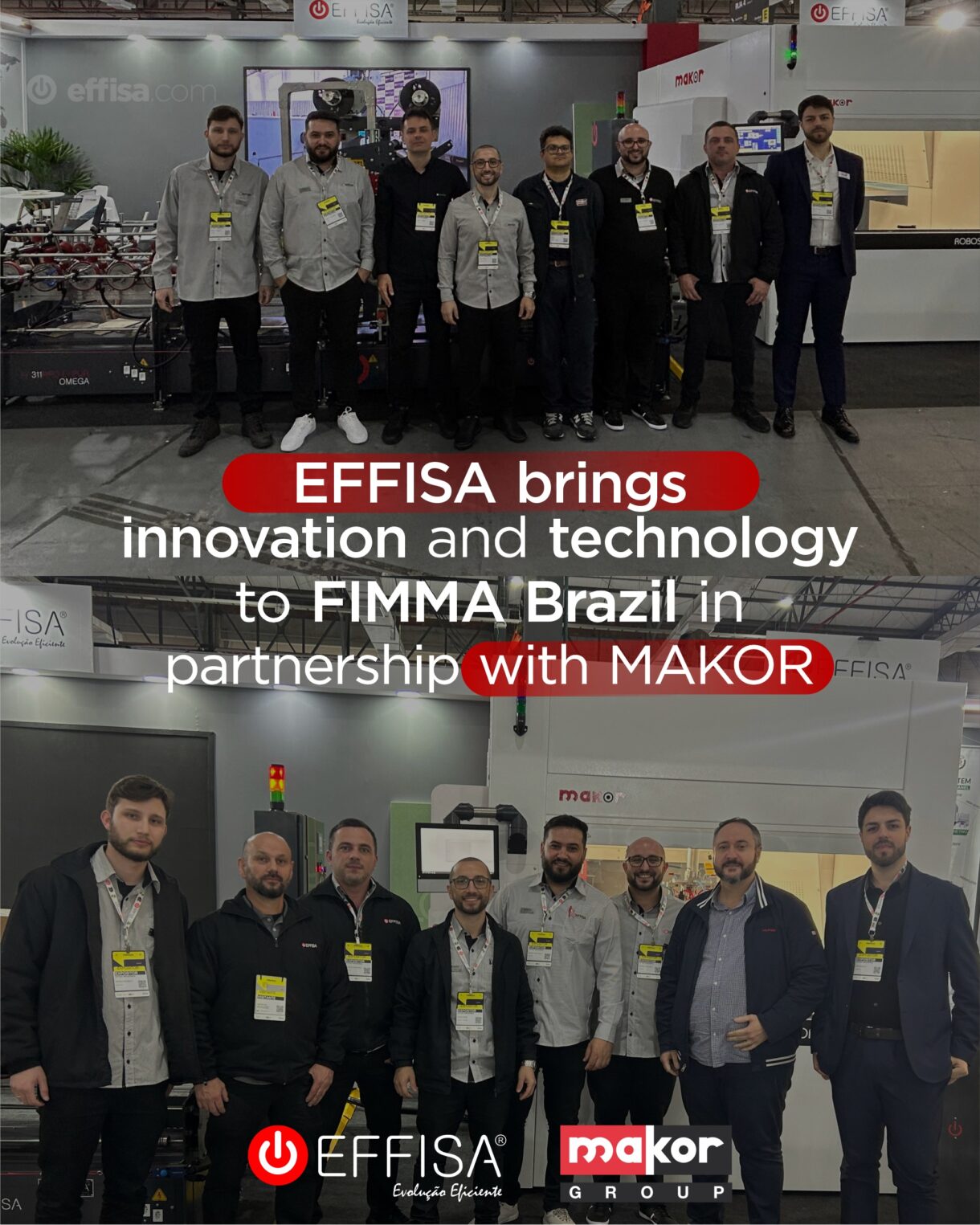
EFFISA brings innovation and technology to FIMMA Brazil in partnership with MAKOR

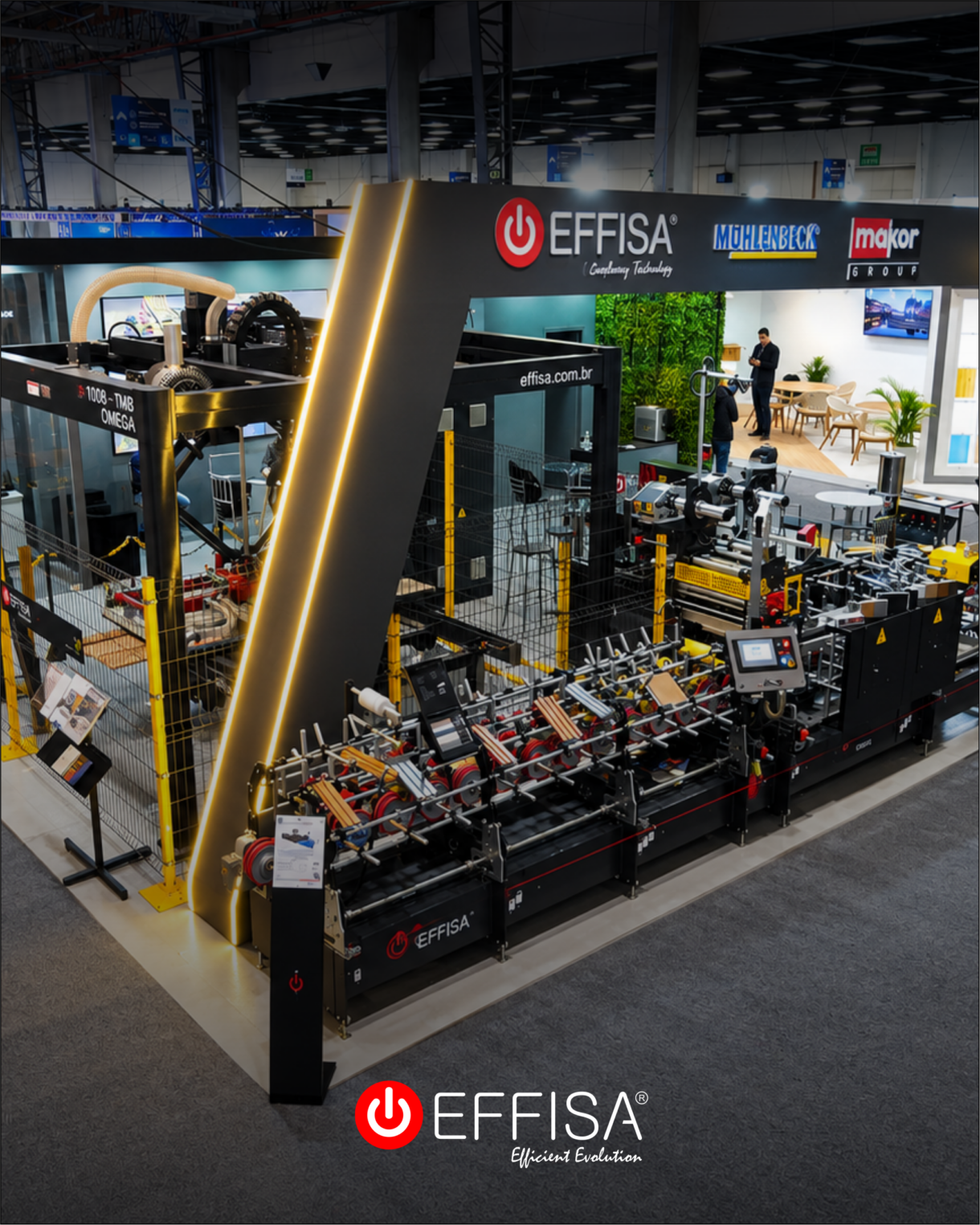
EFFISA took part in FIMMA Brazil, an international trade fair recognized as a benchmark in the furniture industry, held in Bento Gonçalves (RS). The event brought together companies and professionals from around the world in search of technology, innovation, and trends for the wood and furniture production chain.

In this edition, we were present alongside our Italian partner, MAKOR, globally renowned for its excellence in wood finishing solutions. This partnership reaffirms our commitment to providing the Brazilian market with state-of-the-art equipment that combines efficiency, precision, and sustainability.

With over a decade of experience, EFFISA’s purpose is to offer complete solutions for the furniture sector, connecting national manufacturers with the most advanced technologies in the world. Being at FIMMA reinforces our position as a reference in innovation and reliability, while also highlighting the strength of our international partnerships.

Our presence at the fair consolidates our mission to boost the efficiency of the Brazilian furniture industry, bringing clients closer to the best opportunities for growth and global competitiveness.

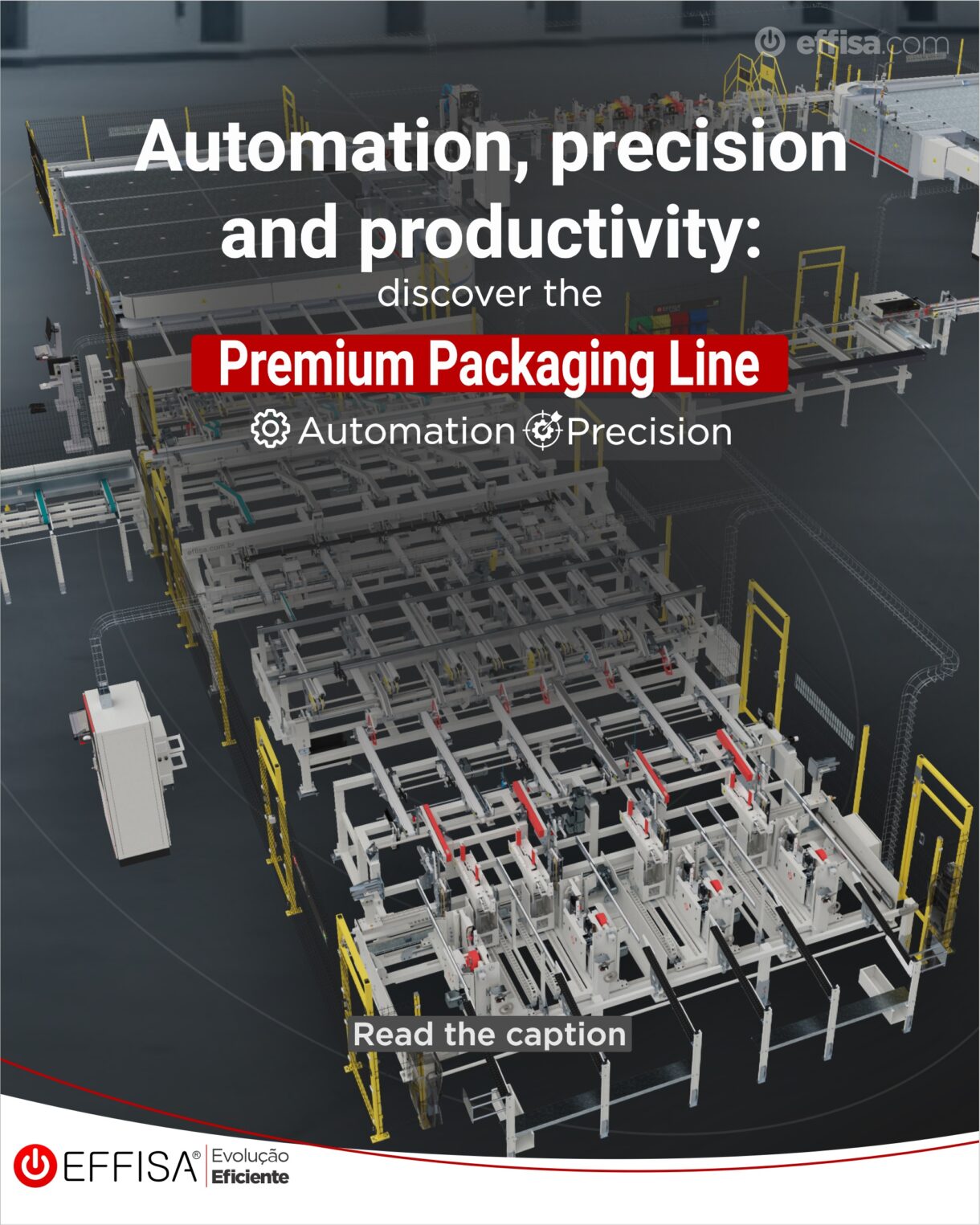
Automation, precision, and productivity: discover Effisa’s Premium Packaging Line

Effisa has developed a complete solution to optimize the final stage of the production of frames and moldings: the Premium Packaging Line.

Designed to ensure standardization, speed, and safety, it automates the entire process — from individual label application, mid-cutting and end-trimming, to final package assembly, with automatic stretch application, spacer placement, and more.

The result? More productivity, fewer errors, and products ready for transport with guaranteed quality.

Stay tuned to our social media and explore in detail how each equipment of this line can transform your production!

PVC Ceiling Panels: Benefits, Applications, and How They Are Made

PVC ceiling panels are one of the top choices in residential, commercial, and industrial projects. And it’s no surprise! They offer a series of advantages that make a real difference when building or renovating.

Besides being beautiful and functional, PVC is also a sustainable and versatile option. But do you know how it’s produced and what technology ensures its quality? Let’s show you everything below.

Benefits of PVC Ceiling Panels
PVC ceilings have conquered the market by being a practical and durable solution. Check out the main benefits:

💧 Moisture-resistant: doesn’t suffer from mold or leaks.

🔧 Easy installation: practical fitting system, no mess, no need for painting.

🧽 Simple maintenance: easy cleaning, just a damp cloth.

🔥 Durability: resistant to termites, fungi, corrosion, and wear.

🎨 Variety of finishes: textures that imitate wood, cement, as well as matte, glossy, or smooth colors.

♻️ Sustainable: 100% recyclable material.

🔨 How Are PVC Ceiling Panels Made?
In addition to these advantages, the production process of PVC ceilings ensures their quality and aesthetics.

After manufacturing the profiles, they go through a decorative laminating process using PUR adhesives. This technology provides:

👉 Greater moisture resistance
👉 Longer durability
👉 Variety of sophisticated finishes

🚀 Effisa’s Role in the PVC Ceiling Industry
That’s where Effisa comes in! We specialize in technology for industries that manufacture PVC profiles.

Our equipment is designed for profile coating, ensuring:

🎯 High precision in laminate application
📈 Increased productivity
🗑️ Waste reduction
✨ High-quality finishes that add value to the final product

If your company manufactures PVC ceilings or profiles, count on Effisa to deliver more quality, efficiency, and innovation to your production! 💼

📞 Contact Effisa
Want to know more about how we can help your company produce high-quality PVC ceilings with exclusive finishes? Talk to our team and discover the right solutions for your business.

Preventive Maintenance for Industrial Machines: Investment or Expense?

In the rush of industrial production, machine maintenance is often overlooked — until a major breakdown halts everything. As the saying goes: “machine downtime is expensive.” That’s why preventive maintenance should be seen not as a cost, but as a strategic investment to ensure productivity, safety, and equipment longevity.

Here are 5 essential tips to extend the life of your industrial machines and keep operations running efficiently.


1. Follow the maintenance schedule recommended by the manufacturer

Each machine has its specifics, and manufacturers like EFFISA provide ideal maintenance intervals. Ignoring these recommendations may save time now but will shorten the equipment’s lifespan.
🔧 Practical tip: create a maintenance calendar and use a simple system (like a spreadsheet) to track dates and services.


2. Perform regular visual inspections

You don’t need to wait for a technician. Small signs like unusual noises, leaks, or misaligned parts can be detected through quick daily or weekly inspections.
👀 Practical tip: train your team to spot basic issues and report them immediately to the maintenance lead.


3. Keep machines clean and well-lubricated

Dust, production residue, and lack of lubrication are major threats to mechanical durability. Proper cleaning and the right lubricants help prevent premature wear.
🛢️ Practical tip: establish a cleaning routine and use a checklist for lubrication points.


4. Use only original or compatible parts and supplies

Cutting costs with generic parts can be risky. Non-standard components reduce performance, increase wear, and put your entire operation at risk.
🧩 Practical tip: maintain direct contact with the manufacturer (such as EFFISA) for genuine or compatible parts and technical support.


5. Keep detailed records and invest in training

Documenting past maintenance helps spot patterns, predict future replacements, and simplify future interventions. Trained operators also avoid usage errors that can shorten machine lifespan.
📘 Practical tip: keep a maintenance log and offer regular training for your team.